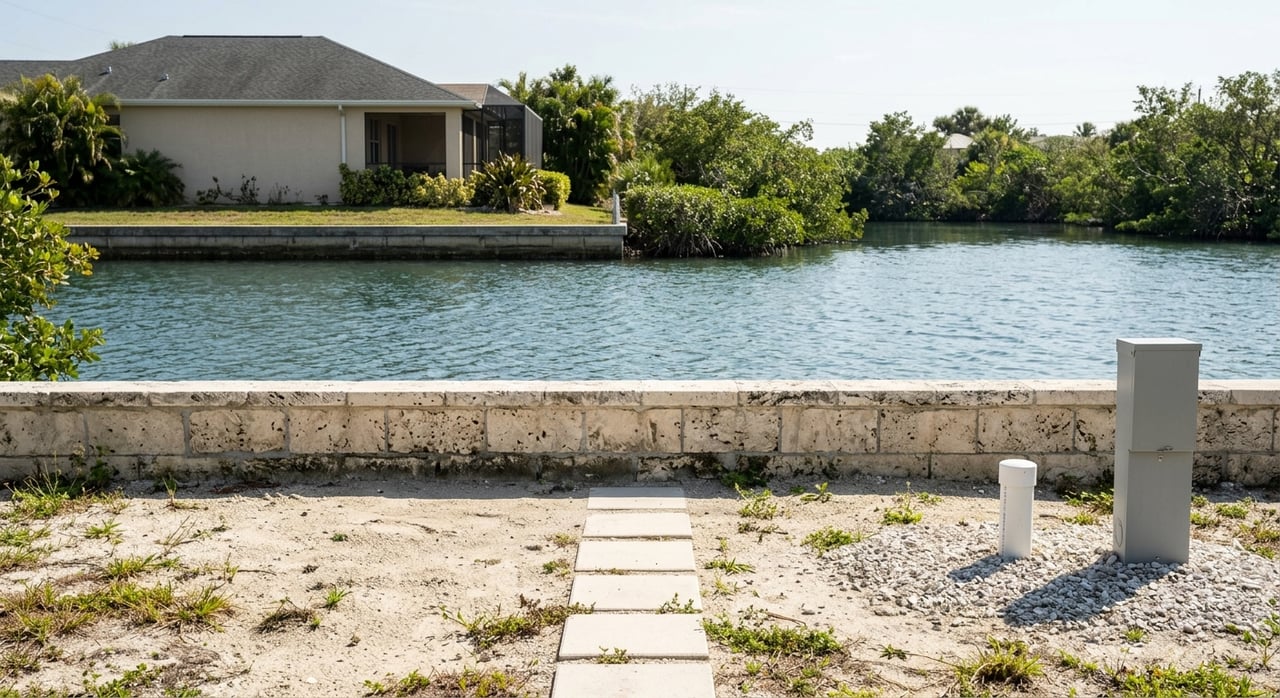
Buying a canal lot in South Gulf Cove can feel exciting and a little overwhelming at the same time. You may be picturing your future home, dock, and boat days, but the details behind the lot matter just as much as the view. If you want to buy with confidence, a clear due diligence plan can help you avoid surprises and move forward with a lot that truly fits your goals. Let’s dive in.
Start With the Exact Parcel
Not every South Gulf Cove lot is governed the same way, so your first step is to confirm the exact parcel you are considering. In South Gulf Cove, some sections fall within the HOA area and are subject to deed restrictions, while other sections may differ.
According to the South Gulf Cove HOA, sections PCH 058, 071, 078, 081, 082, 085, 087, and 093 are in the HOA area and subject to deed restrictions. The HOA is voluntary, but even nonmembers still must comply with the recorded deed restrictions. That means you should never assume a lot has the same rules as another lot down the street.
The county community plan also notes that Section 97 has no deed restrictions and discusses Section 94 lagoon-border common properties. This is a good reminder to verify the section number and the recorded rules tied to your specific parcel before you make an offer.
Why deed restrictions matter
If you plan to build, improve the lot, or make exterior changes later, deed restrictions can affect what you are allowed to do. The HOA states that new homes, garages, improvements, fences, and paint must be preapproved by the Architectural Review Committee.
The HOA also says the deed restrictions override county zoning when the two differ. For you as a buyer, that means recorded private rules may shape your options even if county zoning seems to allow something else.
Check Special Assessments Early
A canal lot purchase is not just about the purchase price. You also want to understand any parcel-specific assessments that may affect your ongoing ownership costs.
South Gulf Cove lots may fall inside county special districts. The South Gulf Cove Waterway Benefit Unit helps fund dredging, repair or replacement of canals, locks, accessory facilities, lock operation, and cattail removal. The South Gulf Cove Non-Urban Street and Drainage Unit funds platted street and drainage work.
The county’s FY25 waterway summary lists rates of $50 for waterfront lots and $25 for dry lots. Before closing, confirm whether your lot is in one or more of these districts and verify the current assessment details for that parcel.
Use County GIS Before You Offer
One of the most useful tools in this process is Charlotte County GIS. It can help you check important parcel-level facts before you get too far into the deal.
The county GIS system includes layers for flood zones, storm surge evacuation zones, MSBU districts, sections, lot numbers, waterway names, and official records search links. That gives you a practical way to verify the section, waterfront status, and district overlays tied to the property.
What to verify in GIS
Before or during your inspection period, review:
- Parcel boundaries
- Section number
- Waterway name
- Flood zone
- Storm surge evacuation zone
- MSBU or assessment district overlays
- Waterfront status
This step can help you catch issues early and ask better questions before you commit.
Confirm Utilities and Service Setup
South Gulf Cove is often marketed as a build-friendly community, but you still need to verify utility service for the exact lot. Neighborhood-wide statements are helpful, but they should not replace parcel-specific confirmation.
The South Gulf Cove HOA says every property has city water, sewer, electricity, phone, and fiber optic internet available, and it directs owners to Charlotte County Utilities for water and sewer service. Charlotte County Utilities provides potable water, wastewater treatment and disposal, and reclaimed water throughout unincorporated Charlotte County.
Still, permit guidance from the county shows why lot-level verification matters. For a single-family permit, the application must include either a Charlotte County Utilities application, an approved septic permit, or a utility company letter confirming service at that location.
Hire a Surveyor Early
If you are buying a canal lot to build on now or later, a survey is one of the most important pieces of your due diligence. It helps confirm what you are really buying and what may affect your building envelope.
Charlotte County’s single-family permit guidance requires a signed and sealed survey less than one year old, a topographic survey, and site plans showing setbacks to property lines, easements, the seawall or mean high water line, and street names. Those requirements give you a good roadmap for what matters on a buildable lot.
On canal frontage, small details can have a big impact. Easements, shoreline lines, and setback constraints can affect where your home, pool, dock, or other improvements may go.
Why this step matters on canal lots
The county notes that it does not verify the final location of structures or setbacks in its accessory-structure affidavit. In practice, that means the owner and contractor remain responsible for compliance.
For you, the safest move is to have your surveyor, title team, and builder look at the lot early. That way, you can confirm easements and setback limits before closing instead of discovering them later.
Review Flood Risk Before Planning the Build
Flood and elevation questions are a major part of buying waterfront land in Charlotte County. It is smart to review them before you choose your lot, builder, or home design.
Charlotte County describes itself as a low-lying county with flood hazards tied to rivers, Charlotte Harbor, the Gulf of Mexico, storm surge, king tides, prolonged rainfall, and sea level rise. The county also says the Coastal A Zone must be regulated to the highest V-zone standards.
That does not mean every lot is the same. It means you should check the exact flood designation for the parcel and use official county and FEMA mapping rather than nearby homes or general neighborhood assumptions.
Flood items to review
Focus on these points early in the process:
- FEMA flood zone for the specific lot
- Storm surge evacuation zone
- Whether the lot may fall in a Coastal A Zone
- How the flood designation may affect home design and permitting
This step can help you have more informed conversations with your builder and insurance contacts as you plan ahead.
Inspect the Seawall Situation
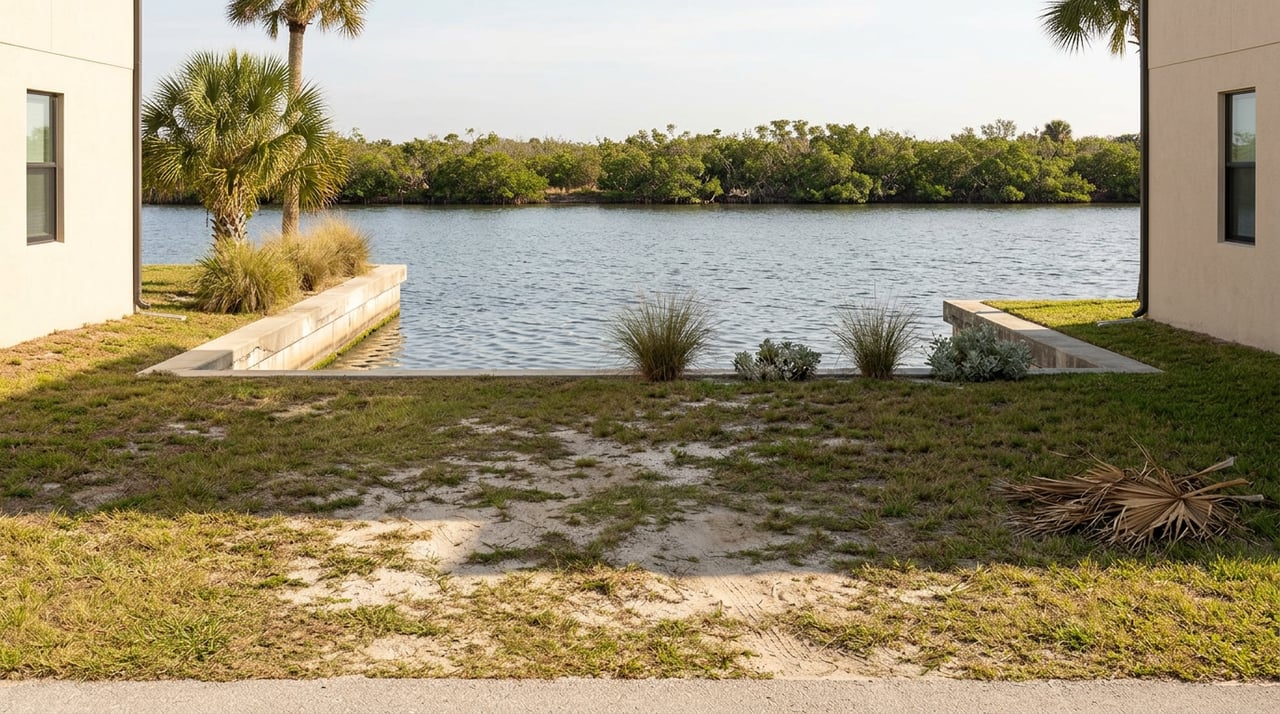
If the lot already has a seawall, do not assume it is in good shape or properly permitted. If it does not have one, you will want to understand what installation may involve.
Charlotte County says a residential seawall permit requires engineered design specifications, a property survey showing maintenance, utility, and right-of-way easements or an affidavit if a survey is unavailable, plus a site plan. Depending on the location and scope of the work, approvals may also be needed from the Florida Department of Environmental Protection or the U.S. Army Corps of Engineers.
Ask whether the seawall exists, whether it was permitted, and whether it may need repair or replacement. This is an important budget and timing question for any canal lot purchase.
Know the Dock and Lift Rules
If your goal is to enjoy boating from your property, check dock and lift requirements before closing. It is easier to plan around real permit standards than to rely on assumptions.
Charlotte County says a residential dock permit requires signed and sealed drawings, a site plan showing property lines and the proposed structure, and external agency approval from the Florida Department of Environmental Protection and or the U.S. Army Corps of Engineers. If the dock or boat lift includes electrical work, that electrical work must be subcontracted to a state-licensed electrical contractor or covered by a separate electrical permit.
Can you install shoreline improvements first?
Yes. Charlotte County says a vacant residential lot may have a seawall, dock, and fence installed before the primary structure is built.
That can be helpful if you want to improve the shoreline first and build later. Just remember that the county also says nothing may be stored on the vacant lot.
Understand Open-Water Access
A canal lot in South Gulf Cove can offer real boating access, but you should understand how that access works. It is not something to assume from a listing description alone.
Boating access depends on the county-managed lock system. Charlotte County Public Works maintains the South Gulf Cove Lock, and the South Gulf Cove Waterway Benefit Unit helps fund lock operation, dredging, and related waterway work.
The county also posts marine advisories when the lock is cleaned or temporarily restricted. The county’s Parallel Lock project page shows that additional access is being pursued because of traffic volume and recurring maintenance issues with the existing lock, but that project remains in planning and approval.
Questions to ask about boating access
Before you buy, ask:
- What waterway serves the lot?
- Does the route to open water depend on the lock?
- Are there any current advisories or temporary restrictions?
- How might lock operations affect your boating plans?
This step is especially important if boating access is one of the main reasons you are buying the lot.
A Simple Step-By-Step Buying Plan
When you keep the process organized, buying a canal lot becomes much more manageable. A practical sequence can help you move from excitement to confidence.
- Confirm the exact parcel, section, HOA status, and deed restrictions.
- Verify whether the lot falls inside any waterway, drainage, or other assessment districts.
- Use county GIS to review boundaries, flood zone, evacuation zone, waterway name, and overlays.
- Confirm utility availability and service requirements for the specific parcel.
- Ask whether a seawall exists and whether it is permitted or may need work.
- Hire a surveyor early to review setbacks, easements, shoreline lines, and buildability.
- Involve your builder and permitting contacts if you plan a home, dock, lift, seawall, or shoreline improvements.
- Check current lock conditions and water access details before relying on boating access in your decision.
Why Local Guidance Helps
South Gulf Cove canal lots can be a great fit if you want waterfront living, future building flexibility, or a place to enjoy the Southwest Florida lifestyle. At the same time, these purchases come with details that deserve close attention.
When you have local guidance, it is easier to connect the lifestyle side of the purchase with the practical side. That includes understanding sections, deed restrictions, assessments, flood questions, shoreline improvements, and build planning before you close.
If you are thinking about buying a canal lot in South Gulf Cove, the right support can make the process clearer from day one. For tailored guidance on South Gulf Cove lots, new construction planning, and waterfront property in Charlotte County, connect with Denise Heath.
FAQs
Are all South Gulf Cove canal lots under the same rules?
- No. Section rules can differ, so you should verify the exact parcel, section, HOA status, and recorded deed restrictions before buying.
Is the HOA mandatory for South Gulf Cove lots?
- In most South Gulf Cove sections, the HOA is voluntary, but deed restrictions still apply where recorded.
Can you build a dock before building a house in South Gulf Cove?
- Yes. Charlotte County says a vacant residential lot may have a seawall, dock, and fence installed before the primary structure is built, but nothing may be stored on the lot.
How do you check flood information for a South Gulf Cove lot?
- Use Charlotte County GIS and official flood mapping to verify the specific parcel’s flood zone and storm surge evacuation zone.
What should a buyer verify about a South Gulf Cove seawall?
- You should ask whether a seawall already exists, whether it was permitted, and whether it may need repair or replacement.
Does every South Gulf Cove canal lot have the same boating access?
- No. Open-water access depends on the lot’s waterway route, the county-managed lock system, and any current lock restrictions or marine advisories.