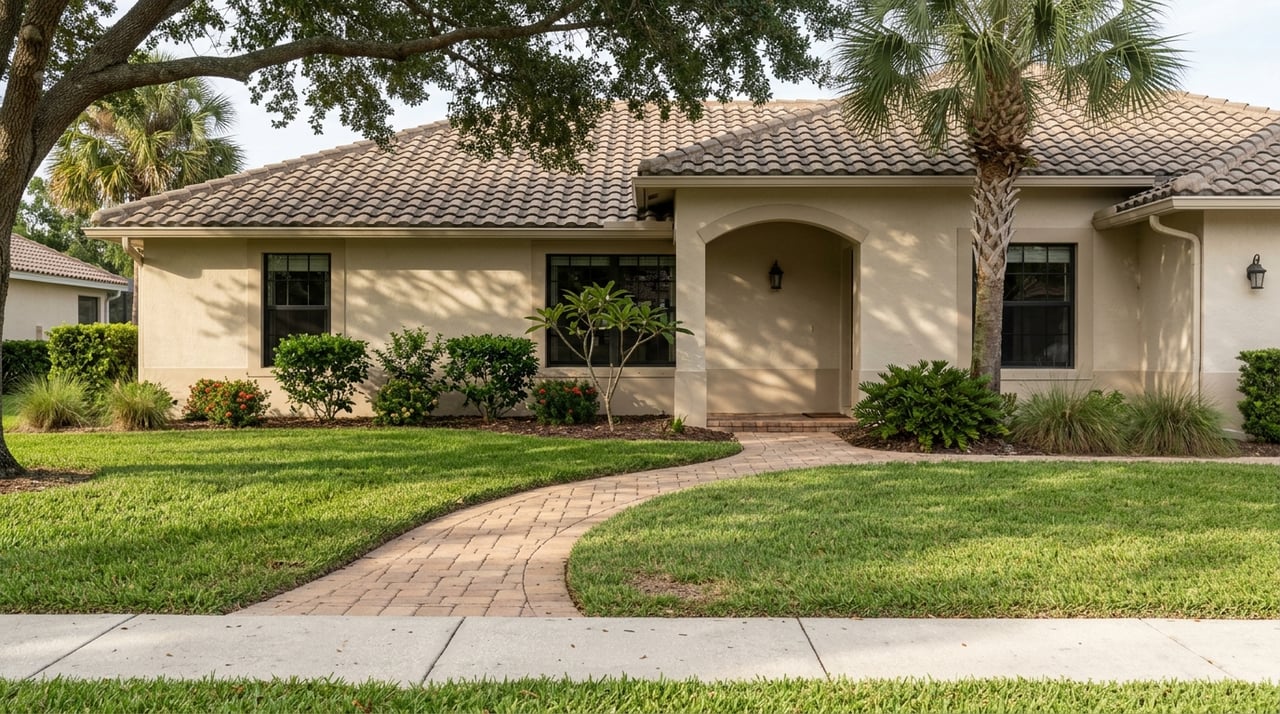
If you are trying to choose where to live in Venice, one question tends to shape everything else: do you want a newer planned neighborhood with built-in amenities, or an older area closer to downtown and the beach? Both options can fit a Gulf Coast lifestyle, but they offer that lifestyle in very different ways. Once you understand the tradeoffs, it becomes much easier to narrow your search and focus on what fits your day-to-day life best. Let’s dive in.
Why Venice feels split in two
Venice has a distinct layout and history that naturally creates two different home search paths. The city was incorporated in 1927, and its historic downtown and surrounding residential pattern were shaped by John Nolen’s 1926 to 1929 plan.
That history still matters today. Many buyers find themselves choosing between close-in, older areas with established character and newer master-planned communities that are designed around amenities, trails, and association structure.
Venice also attracts a mix of full-time residents, retirees, and winter residents. With downtown, beaches, parks, and newer communities all competing for attention, your decision often comes down to the kind of lifestyle you want most.
What newer planned communities offer
In the Venice area, newer planned communities usually center on convenience, recreation, and a more managed setting. Instead of relying on nearby public spaces as the main draw, these neighborhoods often build lifestyle features right into the community.
That can mean clubhouses, pools, fitness spaces, sports courts, walking trails, and neighborhood gathering areas. For many buyers, especially second-home or relocation buyers, that structure can make everyday living feel simpler and more predictable.
Wellen Park as a key example
Wellen Park is one of the clearest examples of the planned-community model near Venice. It is an 11,000-acre master-planned community with 22,000 homes planned at full buildout, more than 30 miles of trails, and a mixed-use Downtown Wellen area.
It also highlights an important detail for buyers: not every Venice-addressed property is necessarily inside Venice city limits. According to Wellen Park, some parcels west of I-75 may fall within the City of North Port or unincorporated Sarasota County, depending on the specific location.
That is why it helps to look beyond the mailing address. Jurisdiction can affect how you understand the property’s location, services, and community structure.
Amenity-rich living in newer neighborhoods
Within Wellen Park, Sunstone shows what many buyers picture when they think of newer community living. Wellen Park describes it as a neighborhood of single-family homes and attached villas with a resort-style amenity campus that includes a private clubhouse, fitness center, pickleball courts, a heated spa, and a beach-entry pool.
Grand Palm offers a similar lifestyle with a nature-focused angle. Neal Communities describes walking and biking trails, lakes, parks, multiple pools, a water slide, fitness spaces, sports courts, a playground, dog parks, a clubhouse, and social activities.
Oakbend Wellen Park adds another version of the same concept. Toll Brothers describes it as a gated new-home community with future resort-style amenities including a clubhouse, fitness center, pool, pickleball and bocce courts, a playground, a viewing dock, and trail access to CoolToday Park and Downtown Wellen.
Who often prefers this setup
If you like the idea of newer construction, shared amenities, and a neighborhood that feels highly organized, this type of community may appeal to you. It can also be attractive if you are buying from out of state, shopping for a winter retreat, or looking for a lower-maintenance routine.
The tradeoff is usually less individuality and more structure. You are often agreeing to community rules, monthly fees, and a more standardized neighborhood environment in exchange for amenities and maintenance support.
What older Venice areas offer
Older areas closer to downtown and the beach tend to offer something very different. Instead of a private amenity campus, the appeal often comes from location, historic character, and access to public spaces that are already part of daily life.
For many buyers, that creates a more organic feel. The neighborhood itself, along with downtown, the beach, and local parks, becomes the lifestyle feature.
Historic character near downtown
The City of Venice notes that the John Nolen Plan of Venice Historic District was platted between 1926 and 1929. The city’s local register also notes that properties may come from the John Nolen era or other significant periods.
That means buyers in older Venice areas are often choosing more than a house. They are also choosing a setting with established visual character and a strong sense of place.
The city also has a Historic Venice and Venetian Theme architectural control framework. In some cases, alterations, additions, demolition, relocation, and new construction can require city review.
Downtown and beach proximity
Venice MainStreet describes its mission as preserving and enhancing the character, beauty, and economic vitality of historic downtown Venice and surrounding areas. It also promotes the downtown district as being near beaches, the pier, history, and cultural organizations.
That creates a very different daily rhythm than a gated subdivision with private amenities. In close-in Venice, the public downtown often serves as the social and lifestyle hub.
Venice Beach reinforces that advantage. It is described as a short walk from downtown, and the city notes that it is within city limits but maintained by Sarasota County, with free parking, county lifeguards, a pavilion, and boardwalks.
Parks and public recreation
The close-in lifestyle is not just about downtown. The city also says Venice has more than 30 parks, along with the 5-mile Venetian Waterway Park trail.
If you enjoy public recreation, nearby shoreline access, and being closer to established civic spaces, older Venice areas may feel more connected to the broader community. For some buyers, that matters more than having a clubhouse or private pool inside the neighborhood.
HOA and CDD differences matter
One of the biggest differences between planned communities and older areas is not always obvious during a first tour. It is the ownership and cost structure behind the neighborhood.
In newer communities, you may need to evaluate more than the home itself. You may also need to understand how HOA fees and CDD or improvement-district assessments fit into your total monthly and annual costs.
HOA vs. CDD in Venice-area communities
Florida law defines a Community Development District, or CDD, as a local special-purpose government under Chapter 190. The City of Venice uses the same term in its development fact sheet.
That matters because a CDD is not the same as an HOA. A CDD relates to public financing and infrastructure, while an HOA relates to private community management and shared neighborhood standards.
Wellen Park explains the practical side clearly. It states that each neighborhood has HOA fees, that fee amounts and coverage vary by neighborhood, and that the fees typically cover neighborhood amenities and common-area maintenance and landscaping.
Wellen Park also explains that the West Villages Improvement District is the independent special taxing district responsible for infrastructure within part of the master plan. For buyers, that means the total cost picture may include mortgage, property taxes, HOA fees, and sometimes an added district assessment.
Questions to ask before you choose
No matter which direction you are leaning, a few questions can save you time and help you compare communities more clearly.
Confirm the property’s jurisdiction
A Venice mailing address does not always mean the property is inside Venice city limits. In areas tied to larger master plans, jurisdiction can vary by parcel.
That is especially important in places like Wellen Park, where some areas may fall in North Port or unincorporated Sarasota County. Always confirm the exact location and governing jurisdiction for the specific home you are considering.
Review fees and what they cover
If you are looking at a planned community, ask for a full breakdown of HOA fees and whether there is also a CDD or improvement-district assessment. These are separate items, and both can affect your budget.
It also helps to ask what services or amenities are included. Coverage can vary from one neighborhood to another.
Ask about age restrictions
Not every planned community is age-restricted, but some neighborhoods or housing options may be. Wellen Park states that it welcomes all ages while also including one age-qualified neighborhood and 55+ housing options.
If this point matters to your long-term plans, confirm it early. It is easier to filter communities up front than after you have narrowed your favorites.
Check rules for exterior changes
If you are drawn to an older home near downtown, ask whether the property falls under historic or architectural review requirements. In Historic Venice and the Venetian Theme district, certain kinds of work may require city review.
That is not necessarily a negative. It simply means you should understand the process before planning updates, additions, or design changes.
Think about your daily routine
This may be the most important question of all. Do you want to be near downtown, the beach, and public parks, or do you prefer a neighborhood where trails, fitness spaces, and social amenities are built into the community itself?
Neither option is better for everyone. The right fit depends on what makes your everyday life feel easier, more enjoyable, and more aligned with your goals.
Planned neighborhoods vs. older areas
Here is the simplest way to think about the choice in Venice.
Newer planned neighborhoods often offer a more managed, amenity-centered lifestyle with trails, clubhouses, pools, and neighborhood structure. Older areas closer to downtown and the beach often offer location, character, walkability, and access to public recreation instead of a private amenity package.
If you value newer homes, organized amenities, and a more packaged lifestyle, a planned community may feel like the right match. If you value proximity, established character, and a more classic Venice setting, an older area may be the better fit.
The good news is that Venice gives you both options. If you want help comparing neighborhoods, fees, location tradeoffs, or new-construction opportunities along the Gulf Coast, Denise Heath is here to help you sort through the details and move forward with confidence.
FAQs
What is the difference between a planned community and an older Venice area?
- A planned community usually focuses on shared amenities, trails, HOA structure, and a more managed environment, while an older Venice area usually offers established character, downtown or beach proximity, and access to public parks and recreation.
Are all Venice-address homes inside Venice city limits?
- No. Some Venice-addressed properties, including parts of larger master-planned areas, may fall within North Port or unincorporated Sarasota County depending on the parcel.
What should you ask about HOA fees in a Venice planned community?
- Ask how much the HOA fee is, what it covers, whether amenities are included, and whether there is also a separate CDD or improvement-district assessment.
What is a CDD in a Venice-area neighborhood?
- A CDD, or Community Development District, is a local special-purpose government tied to infrastructure and public financing, and it is different from an HOA, which manages private community standards and shared amenities.
Do older Venice homes near downtown have renovation rules?
- Some do. In Historic Venice and the Venetian Theme district, certain alterations, additions, demolition, relocation, and new construction may require city review.
Is downtown Venice close to the beach?
- Yes. Venice Beach is described as a short walk from downtown and includes public amenities such as free parking, county lifeguards, boardwalks, and a pavilion.